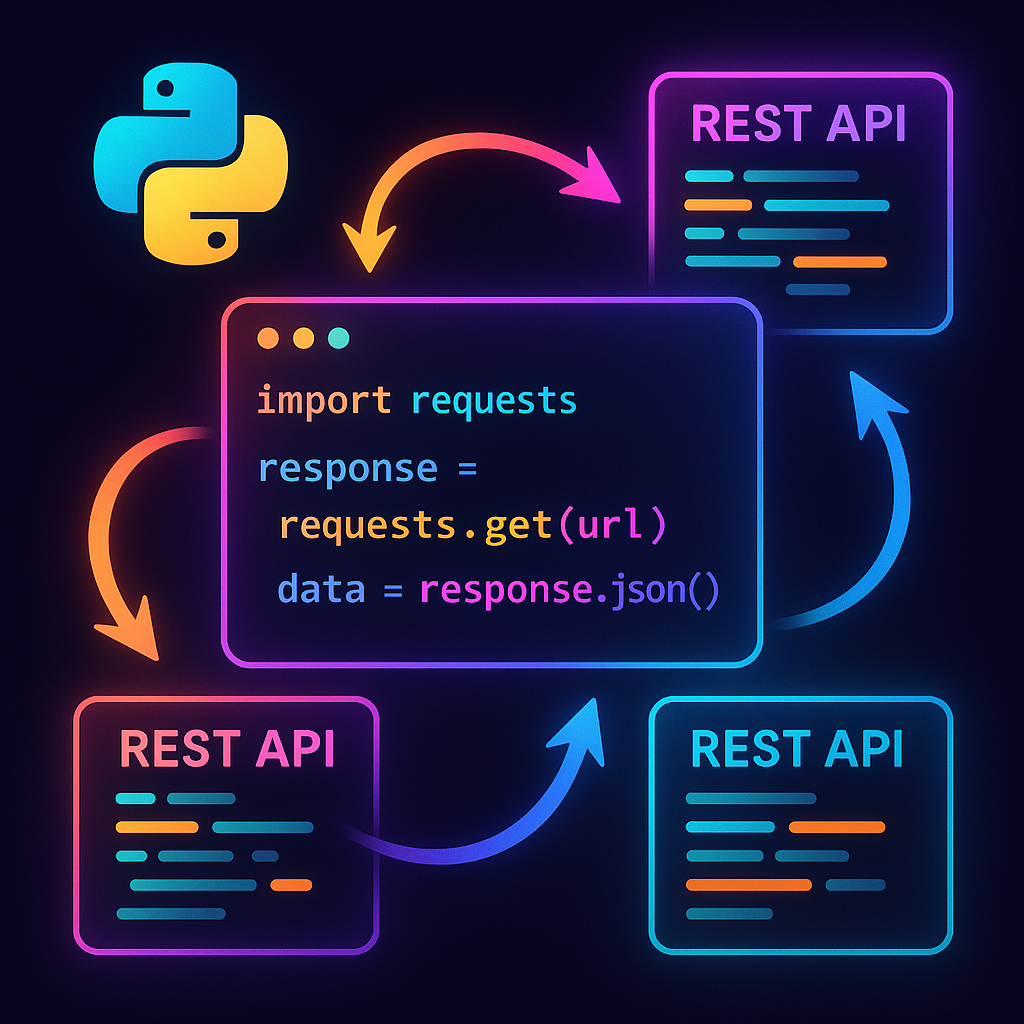

Mastering REST API Integration in Python: Practical Patterns, Tips, and Code Examples
Introduction: The Role of REST API Integration in Modern Python Development
API integrations are fundamental in today’s software landscape. From microservices to SaaS automation, building robust Python code that interacts with REST APIs can vastly expand your application’s capabilities. But making these integrations reliable, performant, and maintainable takes more than a quick HTTP request. In this article, you’ll learn proven strategies, practical code examples, and performance considerations to become effective at REST API integration in Python.
1. Setting Up Your Toolkit: HTTP Clients and Tools
The requests library is the de facto standard for HTTP in Python, prized for its simplicity and flexibility. Let’s start by installing it and making a simple GET request:
pip install requestsimport requests
response = requests.get('https://jsonplaceholder.typicode.com/posts/1')
print(response.status_code)
print(response.json())Why use requests? Its intuitive API and excellent documentation make it suitable for most use cases. For asynchronous or high-throughput requirements, consider httpx or aiohttp, which we’ll discuss in section 5.
2. Authentication Patterns: Handling API Keys, OAuth, and More
Most production APIs require authentication. Here’s how to pass an API key in headers and handle Bearer tokens:
# API Key
headers = {
    'x-api-key': 'your_api_key_here'
}
response = requests.get('https://api.example.com/data', headers=headers)
# Bearer Token (OAuth)
token = 'your_oauth_token_here'
headers = {
'Authorization': f'Bearer {token}'
}
response = requests.get('https://api.example.com/data', headers=headers)Tip: Always use environment variables (via os.environ or libraries like python-dotenv) to avoid hardcoding secrets.
3. Error Handling, Retries, and Timeouts: Writing Robust Integrations
APIs can be unpredictable. Implementing retries, handling rate limits, and setting proper timeouts are crucial:
import requests
from requests.adapters import HTTPAdapter
from urllib3.util.retry import Retry

session = requests.Session()
retries = Retry(total=5, backoff_factor=0.3, status_forcelist=[429, 500, 502, 503, 504])
session.mount('https://', HTTPAdapter(max_retries=retries))

try:
    response = session.get('https://api.example.com/data', timeout=5)
    response.raise_for_status()
    data = response.json()
except requests.exceptions.HTTPError as err:
    print(f'HTTP error: {err}')
except requests.exceptions.Timeout:
    print('Request timed out')
except requests.exceptions.RequestException as e:
    print(f'Other error: {e}')
Performance tip: Always set a timeout. Otherwise, your code could hang on a slow/unresponsive API.
4. Consuming and Parsing API Responses: Best Practices
APIs often return JSON, but errors or data inconsistencies can occur. Always validate the response before processing:
response = requests.get('https://jsonplaceholder.typicode.com/posts/1')
if response.headers['Content-Type'] == 'application/json; charset=utf-8':
    data = response.json()
    print('Title:', data['title'])
else:
    print('Unexpected response type')
For large or complex payloads, use data validation libraries like pydantic to model and validate responses:
from pydantic import BaseModel

class Post(BaseModel):
    userId: int
    id: int
    title: str
    body: str

response = requests.get('https://jsonplaceholder.typicode.com/posts/1')
post = Post(**response.json())
print(post.title)
5. Performance and Scalability: Async APIs with httpx
When integrating with high-latency or rate-limited APIs, asynchronous HTTP lets you dramatically improve throughput. httpx makes async HTTP simple in Python 3.7+:
pip install httpximport asyncio
import httpx
async def fetch_post(client, post_id):
url = f'https://jsonplaceholder.typicode.com/posts/{post_id}'
resp = await client.get(url)
return resp.json()
async def main():
async with httpx.AsyncClient() as client:
results = await asyncio.gather(*[
fetch_post(client, i) for i in range(1, 11)
])
for post in results:
print(post['title'])
asyncio.run(main())
This pattern is highly effective for batch data ingestion or concurrent API calls. When single-threaded code takes seconds, async code often finishes in milliseconds.
Conclusion: Building Reliable, Scalable API Integrations in Python
Integrating with REST APIs in Python is a foundational skill—one that scales from simple scripts to complex data pipelines and backend services. By applying robust authentication, defensive error handling, response validation, and async patterns for scalability, you’ll build integrations that stand up to real-world demands. Happy coding!
Useful links: