
Mastering Python Generators: An In-Depth Guide for Efficient Iteration
Introduction
Generators are one of Python’s most powerful—yet underutilized—features. If you’ve ever worked with large datasets, streams, or needed memory-efficient pipelines, understanding generators is essential. In this article, we’ll dive deep into Python generators, how they work, why they matter, and provide plenty of real-world code to help you master them.
1. What Are Generators and Why Should You Care?
Generators are iterators that yield items one at a time, only as needed. They avoid storing entire sequences in memory, making them ideal for handling large or infinite data streams. Unlike lists or tuples, generators compute values on-the-fly using the yield statement.
def count_up_to(limit):
    n = 1
    while n <= limit:
        yield n
        n += 1

for num in count_up_to(5):
    print(num)
# Output: 1 2 3 4 5
Here, count_up_to is a generator function—each call to yield produces the next value on-demand. This is useful when processing large files, streams, or pipelines.
2. Generator Expressions: Concise, Readable, and Powerful
Much like list comprehensions, Python offers generator expressions for compact, readable code. Instead of square brackets, use parentheses:
squares = (x * x for x in range(10))
print(next(squares))  # 0
print(next(squares))  # 1
# ...and so on
Generator expressions are often combined with built-in functions like sum() or any() for efficient calculation:
total = sum(x * x for x in range(1000000)) # Much more memory efficient than sum([x * x ...])This makes them perfect for scenarios needing quick, large-scale calculations without memory overheads.
3. Real-World Use Case: Processing Large Files Line-By-Line
Suppose you need to process a 5GB log file and extract error messages. Generators shine here, reading files line-by-line so your script uses a constant amount of memory:
def read_large_file(file_path):
    with open(file_path, 'r') as f:
        for line in f:
            yield line

for line in read_large_file('huge_log.txt'):
    if 'ERROR' in line:
        print(line.strip())
Only one line is ever in memory at a time—a lifesaver for big data processing, log analysis, or ETL scripts.
4. Chaining and Composing Generators for Data Pipelines
Generators can be chained together for powerful, flexible data pipelines. Imagine extracting, transforming, and filtering records:
def extract_numbers(file_path):
    with open(file_path) as f:
        for line in f:
            yield int(line.strip())

def even_numbers(numbers):
    for n in numbers:
        if n % 2 == 0:
            yield n

pipeline = even_numbers(extract_numbers('numbers.txt'))
for n in pipeline:
    print(n)
This design pattern is not only memory-efficient but modular, supporting easy extension and debugging. Each step yields data to the next, minimizing resource usage.
5. Performance Tips and Advanced Generator Patterns
– Use itertools for Composable Generators: Python’s itertools module provides optimized generator-based tools, like islice, chain, and takewhile. These keep pipelines efficient and readable.
from itertools import islice

def big_stream():
    n = 0
    while True:
        yield n
        n += 1

for num in islice(big_stream(), 5, 10):
    print(num)  # 5 6 7 8 9
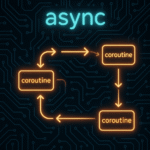
– Sending Data to and from Generators: Generators can receive data via the send() method—useful for coroutines and asynchronous tasks.
def echo():
    while True:
        received = yield
        print(f'Received: {received}')

g = echo()
next(g)
g.send('Hello generator!')
Performance-wise, prefer generators for large collections or pipelines. For small, once-off transformations, lists may be simpler. Always benchmark for your specific case!
Conclusion
Generators supercharge Python’s ability to handle large datasets, pipelines, and streaming data with minimal memory consumption. By understanding how and when to use generator functions, generator expressions, and chaining techniques, you’ll write more scalable and elegant Python code. Experiment with the examples above, explore itertools, and unlock the true power of Python iteration!
Useful links: